Transformer Product Manufacturing:What trends are shaping transformer product manufacturing in 2026?
Q: What trends are shaping transformer product manufacturing in 2026?
A: In 2026, transformer product manufacturing is being reshaped by three forces: sustainability, digitalization, and supply chain resilience. Manufacturers are widely adopting amorphous metal cores and grain-oriented electrical steel with lower loss grades to meet tightening efficiency standards like the EU Ecodesign and US DOE 2029 rules. Dry-type and ester-fluid transformers are gaining share in urban and renewable installations because they reduce fire risk and environmental impact. On the factory floor, digital twins and AI-driven process control are becoming standard, allowing engineers to simulate winding tension, core stacking, and thermal performance before physical production, which cuts prototype cycles by up to 40 percent. Automation in coil winding, vacuum pressure impregnation, and tank welding is improving consistency, while robotics handle repetitive tasks amid persistent skilled-labor shortages. Supply chain regionalization is another major shift: OEMs are diversifying silicon steel, copper, and bushings sourcing across North America, Europe, and Southeast Asia to avoid single-region disruptions. Finally, additive manufacturing is emerging for complex components like cooling fins and custom busbars. Together, these trends are pushing transformer manufacturing toward higher efficiency, faster delivery, and greater transparency through digital product passports.
Q: How is automation changing transformer manufacturing in 2026?
A: Automation in 2026 has moved well beyond basic CNC winding machines. Modern transformer factories now integrate robotic coil winding with real-time tension feedback, automated core cutting and stacking lines, and AI-based vision inspection that detects insulation defects invisible to the human eye. Collaborative robots work alongside technicians in tank fabrication and bushing assembly, reducing ergonomic injuries and improving throughput. The biggest leap is the connected factory: IoT sensors on winding, drying, and impregnation equipment stream data to a manufacturing execution system, which adjusts parameters on the fly and predicts maintenance before failures occur. Digital twins mirror every work order, so engineers can validate designs virtually and catch tolerance issues early. For custom or low-volume transformers, flexible automation cells switch between product families in minutes rather than hours. The result is shorter lead times, typically 15 to 30 percent faster than 2023 benchmarks, and more consistent quality across global plants. However, automation has not eliminated the need for skilled workers; instead, it has shifted demand toward technicians who can program, monitor, and troubleshoot intelligent systems. Manufacturers investing in upskilling are seeing the greatest returns, while those relying on legacy labor-intensive processes face rising cost and quality pressure.
Q: What materials and designs are transforming transformer production in 2026?
A: Transformer production in 2026 is being transformed by advanced materials and compact designs. On the magnetic side, high-permeability grain-oriented electrical steel and amorphous alloys are cutting no-load losses by 20 to 30 percent compared with conventional grades, helping manufacturers meet stricter efficiency mandates. Nanocrystalline cores are appearing in high-frequency applications such as EV chargers and solid-state transformer prototypes, where low loss and small size matter most. For windings, copper remains dominant, but aluminum is making a comeback in cost-sensitive distribution transformers thanks to improved joining techniques and corrosion protection. Insulation systems are shifting toward biodegradable ester fluids and high-temperature polyimide films, enabling smaller clearances and higher overload capacity. In design, dry-type and cast-resin transformers are favored for indoor and fire-sensitive sites, while modular architectures allow pre-fabricated windings and cores to be assembled near the point of use, slashing shipping weight and lead time. Additively manufactured cooling channels and busbars are moving from lab to pilot production, offering thermal performance gains that conventional machining cannot match. Digital product passports, required in the EU from 2026 for many electrical products, are pushing manufacturers to document material composition and recyclability, which in turn encourages design for disassembly and circular material use.
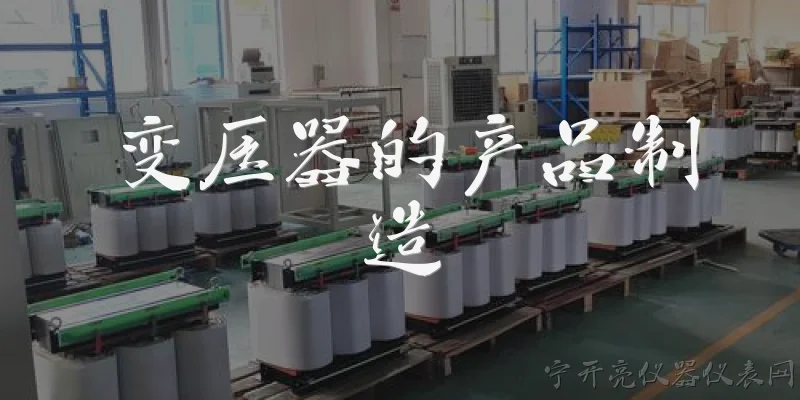
Dialogue about
Common scenarios of "Transformer Product Manufacturing"
【Manufacturing Engineer】 Good morning, team. Today we need to finalize the design for the new 500 kVA distribution transformer. Let's review the core specifications and manufacturing plan.
【Design Engineer】 The core will use grain-oriented silicon steel with a step-lap configuration to reduce eddy currents. We've optimized the cross-section for a flux density of 1.6 T.
【Quality Control Specialist】 I'll need to inspect the core stacking to ensure no gaps exceed 0.5 mm and that the clamping pressure is within spec. We should also test for core loss after assembly.
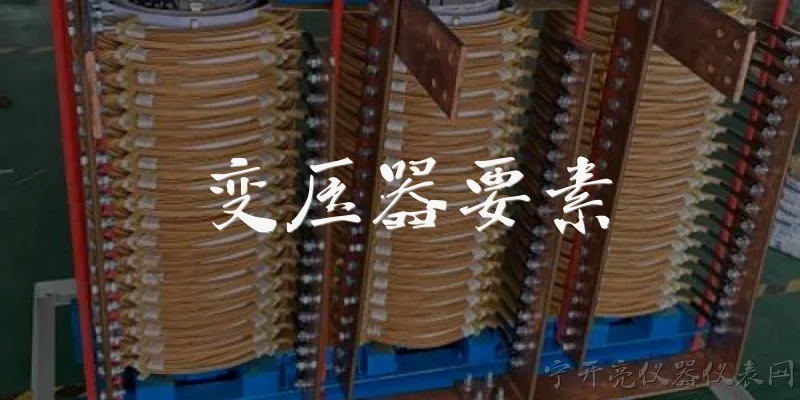
【Manufacturing Engineer】 Agreed. For the windings, we'll use copper conductors. The high-voltage winding will be layer-wound, and the low-voltage winding will be foil-wound to handle the high currents.
【Design Engineer】 Make sure to include cooling ducts between winding layers. We'll need to calculate the thermal rise based on the cooling class, which is ONAN for this model.
【Quality Control Specialist】 I'll prepare a test plan for dielectric strength: applied voltage test, induced voltage test, and impulse test. We must also check partial discharge levels.
【Manufacturing Engineer】 We've scheduled the winding process for next week. The winding machine is calibrated, and we have trained operators for the foil winding.
【Design Engineer】 Don't forget the insulation: use Nomex paper for the conductor insulation and kraft paper for the barriers. The clearances must be at least 10 mm for the 20 kV class.
【Quality Control Specialist】 I'll verify the insulation clearances and perform a visual inspection before impregnation. Also, we need to ensure the oil is filtered and tested for moisture content below 10 ppm.
【Manufacturing Engineer】 The tank fabrication is underway. We'll use mild steel with a corrosion-resistant coating. The tank must withstand a pressure of 0.5 bar for the leak test.
【Design Engineer】 Include radiators for cooling. The thermal design indicates we need 8 radiator panels to dissipate the heat at full load.
【Quality Control Specialist】 I'll conduct a leak test after assembly and a temperature rise test at the end. We should also check the oil flow through the radiators.
【Manufacturing Engineer】 Assembly sequence: core and windings are assembled, then dried in an oven at 110°C for 24 hours to remove moisture. After that, we impregnate with transformer oil under vacuum.
【Design Engineer】 The vacuum impregnation is critical to avoid voids. We need to maintain a vacuum of less than 1 mbar for at least 4 hours.
【Quality Control Specialist】 I'll monitor the vacuum level and oil temperature during impregnation. After impregnation, we'll test the oil dielectric strength again.
【Manufacturing Engineer】 Final assembly includes mounting the bushings, tap changer, and control wiring. We'll use porcelain bushings for the HV side and epoxy for the LV side.
【Design Engineer】 The tap changer should be an off-circuit type with 5 positions. Ensure the contacts are silver-plated for low resistance.
【Quality Control Specialist】 I'll perform a ratio test and a winding resistance test on all tap positions. Also, a functional test of the tap changer.
【Manufacturing Engineer】 We'll then proceed to final testing: routine tests including power loss, impedance, and temperature rise. Then we'll paint and prepare for shipping.
【Quality Control Specialist】 I'll compile the test reports and ensure they meet IEEE and IEC standards. After that, we can release the transformer for delivery.