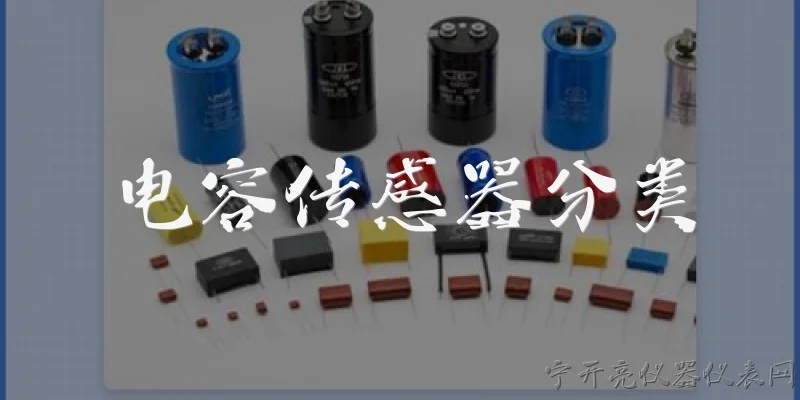
Capacitive Sensor Types:What are the main types of capacitive sensors?
Q: What are the main types of capacitive sensors?
A: Capacitive sensors primarily fall into three main categories: proximity, displacement, and touch sensors. Proximity capacitive sensors detect the presence of nearby objects without physical contact by measuring changes in capacitance. Displacement capacitive sensors measure very small movements or distances with high precision, often used in metrology and industrial automation. Touch capacitive sensors, widely found in smartphones and touchscreens, detect human finger input by sensing the change in capacitance when a conductive object like a finger approaches the surface. Additionally, there are pressure capacitive sensors that measure applied force by detecting the deformation of a dielectric layer between capacitor plates. Each type leverages the same fundamental principle—variation in capacitance due to changes in electric field—but is optimized for specific applications, such as object detection, position measurement, or user interface interaction.
Q: How do self-capacitance and mutual-capacitance sensors differ?
A: Self-capacitance and mutual-capacitance sensors represent two distinct operating principles in capacitive sensing. Self-capacitance sensors measure the capacitance of an electrode relative to ground. When a conductive object, such as a finger, approaches the electrode, it increases the electrode's capacitance to ground. This method is simpler and often used for single-touch or proximity detection. In contrast, mutual-capacitance sensors measure the capacitance between two electrodes: a transmitter and a receiver. A touch or object near the intersection of these electrodes reduces the coupling capacitance, allowing precise localization. Mutual-capacitance is the preferred technology for multi-touch screens because it enables accurate tracking of multiple simultaneous touches and rejects environmental noise better than self-capacitance. However, self-capacitance can be more sensitive to nearby objects at a distance, making it useful for proximity sensing. The choice depends on the required resolution, number of touch points, and environmental robustness.
Q: What are the advantages of capacitive sensors over other sensor types?
A: Capacitive sensors offer several key advantages compared to resistive, inductive, or optical sensors. First, they provide non-contact detection, which eliminates mechanical wear and extends lifespan, making them ideal for repetitive or harsh environments. Second, they can detect a wide range of materials, including conductors and insulators, unlike inductive sensors that only work with metals. Third, capacitive sensors have high sensitivity and can measure extremely small changes in distance or pressure, often down to sub-micrometer levels, which is valuable for precision applications. Fourth, they consume low power and can be miniaturized, suitable for portable and wearable devices. Fifth, they respond quickly and can operate at high frequencies. Additionally, they are robust against contaminants like dust and moisture when properly designed. However, they can be susceptible to electromagnetic interference and require careful shielding. Overall, their versatility, durability, and precision make them a popular choice in consumer electronics, automotive, and industrial automation.
Q: What are common applications of capacitive sensors?
A: Capacitive sensors are ubiquitous across many industries due to their versatility. In consumer electronics, they enable touchscreens, trackpads, and fingerprint scanners. Smartphones and tablets rely on projected capacitive touch technology for multi-touch gestures. In automotive, capacitive sensors detect occupancy for airbag deployment, monitor driver attention, and control infotainment systems. Industrial automation uses them for proximity detection, liquid level sensing, and thickness measurement of non-conductive materials. Medical devices employ capacitive sensors for pressure monitoring and fluid level detection in infusion pumps. Home appliances like touch-controlled ovens and lamps use them for user interfaces. Additionally, they are found in robotics for collision avoidance and gripper feedback, in aerospace for position sensing, and in environmental monitoring for humidity measurement. Their ability to detect proximity, touch, pressure, and displacement without physical contact makes them ideal for applications requiring reliability, hygiene, or high precision. As technology advances, new uses in IoT and smart devices continue to emerge.
Words of experience
Common scenarios of "Capacitive Sensor Types"
【Engineer】 Hi! I'm trying to understand the different types of capacitive sensors. Can you help me?
【Expert】 Absolutely! Capacitive sensors are versatile and come in several types. Let's start with the basics. What do you already know?
【Engineer】 I know they detect changes in capacitance. But I'm not sure about the specific types and their applications.
【Expert】 Great. There are three main types: self-capacitance, mutual-capacitance, and differential-capacitance. Each works differently and is suited for different tasks.
【Engineer】 Can you explain self-capacitance first?
【Expert】 Sure. Self-capacitance measures the capacitance between a single electrode and ground. When a conductive object like a finger approaches, it increases the capacitance. This is common in touch buttons and sliders.
【Engineer】 How does mutual-capacitance differ?
【Expert】 Mutual-capacitance uses two electrodes: a transmitter and a receiver. The finger alters the electric field between them, reducing the mutual capacitance. This is used in most touchscreens for multi-touch detection.
【Engineer】 What about differential-capacitance?
【Expert】 Differential-capacitance compares two capacitive sensors and measures the difference. It's excellent for rejecting common-mode noise and is used in precision applications like pressure sensors.
【Engineer】 Which type is best for proximity sensing?
【Expert】 Self-capacitance is often used for proximity sensing because it can detect objects at a distance, but mutual-capacitance can also be configured for proximity with careful design.
【Engineer】 Are there other classifications based on construction?
【Expert】 Yes, there are also surface capacitive and projected capacitive sensors. Surface capacitive uses a uniform conductive layer, while projected capacitive uses a grid of electrodes, enabling multi-touch.
【Engineer】 What are the advantages of capacitive sensors over other types?
【Expert】 They are highly sensitive, can detect through non-conductive materials, have no moving parts, and are durable. They also support multi-touch and gesture recognition.
【Engineer】 Any limitations I should be aware of?
【Expert】 Yes, they can be affected by environmental factors like humidity and temperature, and they require calibration. They also may not work well with gloves or if the surface is wet.
【Engineer】 Thanks! This gives me a solid overview. I'll dive deeper into each type for my project.
【Expert】 You're welcome! Feel free to ask if you have more questions. Good luck with your project!