Cable Sheath Tensile Testing Machine:What is a cable sheath tensile testing machine and what is its primary purpose?
Q: What is a cable sheath tensile testing machine and what is its primary purpose?
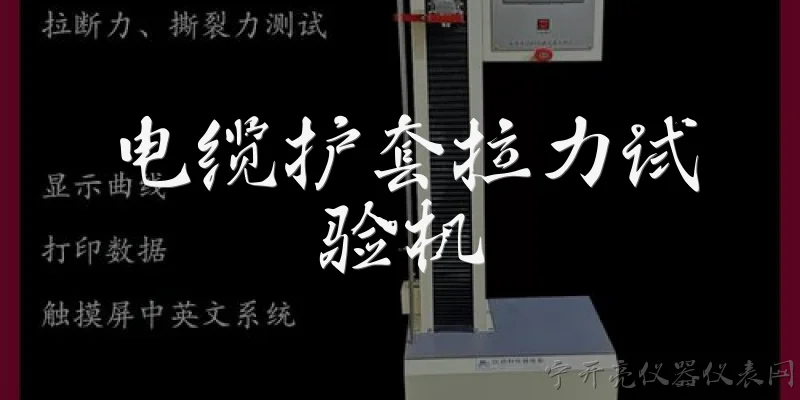
A: A cable sheath tensile testing machine is a specialized instrument used to evaluate the mechanical properties of cable sheathing materials, such as tensile strength, elongation at break, and modulus of elasticity. Its primary purpose is to ensure that cable sheaths can withstand mechanical stresses during installation, operation, and environmental exposure. According to the International Electrotechnical Commission (IEC) standard IEC 60811-501, which specifies test methods for insulating and sheathing materials of electric cables, tensile testing is essential for verifying compliance with material performance requirements. The machine typically consists of a load frame, grips, and a data acquisition system that records force and displacement during the test.
Q: Which international standards govern the tensile testing of cable sheaths?
A: The tensile testing of cable sheaths is primarily governed by international standards such as IEC 60811-501, "Electric and optical fibre cables – Test methods for non-metallic materials – Part 501: Mechanical tests – Tests for determining the mechanical properties of insulating and sheathing compounds." This standard outlines procedures for preparing test specimens, conditioning, and performing tensile tests at specified speeds and temperatures. Additionally, ASTM D638, "Standard Test Method for Tensile Properties of Plastics," is often referenced for polymeric sheath materials. These standards ensure reproducibility and comparability of results across different laboratories and manufacturers, as emphasized in reports by the International Electrotechnical Commission.
Q: How does a cable sheath tensile testing machine operate during a typical test?
A: A cable sheath tensile testing machine operates by clamping a prepared specimen (e.g., a dumbbell-shaped sample cut from the sheath) between two grips. The moving crosshead then pulls the specimen at a constant rate until it breaks, while a load cell measures the applied force and an extensometer or crosshead displacement measures elongation. The data are recorded to generate a stress-strain curve, from which tensile strength and elongation at break are calculated. According to IEC 60811-501, the test speed is typically 25 mm/min for sheathing materials, and the test is conducted at a specified temperature, often 23°C. The machine's software automates data analysis, ensuring accuracy per standard requirements.
Q: Why is tensile testing important for cable sheath quality control and safety?
A: Tensile testing is critical for cable sheath quality control and safety because it verifies that the sheath material meets mechanical performance requirements, such as sufficient tensile strength and elongation to resist cracking, tearing, or deformation during handling, installation, and service. A sheath that fails mechanically can expose conductors, leading to electrical hazards, short circuits, or fire risks. Regulatory bodies and industry reports, such as those from the U.S. Consumer Product Safety Commission (CPSC) and the European Committee for Electrotechnical Standardization (CENELEC), emphasize that compliance with standards like IEC 60811-501 ensures cables are safe and reliable. Routine tensile testing helps manufacturers detect material inconsistencies and maintain product quality.
Q: What key parameters are measured by a cable sheath tensile testing machine?
A: A cable sheath tensile testing machine measures several key parameters: tensile strength (the maximum stress a material can withstand before breaking), elongation at break (the percentage increase in length before fracture), and sometimes modulus of elasticity (stiffness) and yield strength. These parameters are derived from the force-displacement data recorded during the test. According to IEC 60811-501, the tensile strength is calculated by dividing the maximum force by the original cross-sectional area of the specimen, while elongation at break is the change in length relative to the initial gauge length. These values are compared against specified limits in cable standards to determine material acceptability.
Dialogue about
Common scenarios of "Cable Sheath Tensile Testing Machine"
【Quality Control Engineer】 Hi, I'm having issues with our cable sheath tensile testing machine. The results are inconsistent. Can you help?
【Technical Support Specialist】 Of course. Inconsistent results can stem from several factors. Can you describe the inconsistency? Are the values fluctuating widely?
【Quality Control Engineer】 Yes, sometimes the tensile strength readings vary by up to 15% for the same batch of cables.
【Technical Support Specialist】 That's significant. First, check if the machine is calibrated properly. When was the last calibration?
【Quality Control Engineer】 We calibrated it last month, but maybe we missed something. How often should we calibrate?
【Technical Support Specialist】 Typically every 6 months, but if used heavily, every 3 months. Also, ensure the load cell is not damaged.
【Quality Control Engineer】 How can I check the load cell? We don't have a spare.
【Technical Support Specialist】 You can perform a quick test with known weights. If the readings are off, the load cell might need replacement.
【Quality Control Engineer】 Okay, I'll try that. Also, could the grips be causing the variation?
【Technical Support Specialist】 Absolutely. Worn grips can lead to slippage. Inspect the grips for wear and replace if necessary.
【Quality Control Engineer】 We have self-tightening grips. Are they prone to wear?
【Technical Support Specialist】 Yes, especially if used with abrasive materials. Check the teeth and replace them if they're dull.
【Quality Control Engineer】 What about the testing speed? Could that affect the results?
【Technical Support Specialist】 Testing speed should be consistent according to the standard. Is your machine maintaining the set speed?
【Quality Control Engineer】 I think so, but we haven't verified it recently. How can we check?
【Technical Support Specialist】 Use a tachometer or check the machine's calibration for speed control. Also, ensure the software settings are correct.
【Quality Control Engineer】 We recently updated the software. Could that be the issue?
【Technical Support Specialist】 Possibly. Software updates can change default parameters. Verify that all settings match your testing standard.
【Quality Control Engineer】 I'll double-check the settings. Any other common issues?
【Technical Support Specialist】 Environmental factors like temperature and humidity can affect results. Ensure the lab is within specified conditions. Also, check for any loose connections or mechanical play in the machine.