High-voltage switch dynamic characteristic test:What is a high-voltage switch dynamic characteristic test?
Q: What is a high-voltage switch dynamic characteristic test?
A: A high-voltage switch dynamic characteristic test measures the mechanical motion parameters of a circuit breaker or switchgear during opening and closing operations. Key parameters include contact travel, velocity, acceleration, opening and closing times, contact bounce, and synchronization between phases. The test uses sensors such as linear or rotary transducers, accelerometers, and timing devices connected to the switch mechanism. By analyzing the motion curve, engineers can identify mechanical issues like excessive friction, worn linkages, or damper problems. This test is crucial for verifying that the switch can interrupt fault currents quickly and reliably, ensuring safe and stable operation of the power grid.
Q: Why are dynamic characteristic tests important for high-voltage switches?
A: Dynamic characteristic tests are essential because they directly assess the mechanical health and performance of high-voltage switches. A switch that opens too slowly or bounces excessively may fail to interrupt fault currents, leading to equipment damage or system instability. These tests help detect early signs of wear, misalignment, or lubrication issues before they cause failure. They also verify that the switch meets manufacturer specifications and regulatory standards. By performing regular dynamic tests, utilities can schedule preventive maintenance, extend equipment life, and avoid costly unplanned outages. Ultimately, reliable switch operation is critical for protecting personnel and maintaining power supply quality.
Q: What sensors and instruments are used in high-voltage switch dynamic characteristic testing?
A: Typical sensors include linear variable differential transformers or rotary potentiometers to measure contact travel, accelerometers to capture velocity and acceleration, and optical or Hall-effect sensors for timing. Current clamps or shunt resistors detect the moment of contact touch. A dynamic characteristic analyzer, often a dedicated instrument with high sampling rates, records and processes the signals. Modern systems may use digital signal processors and software to compute parameters like opening speed, closing speed, bounce time, and travel curve. The choice of sensors depends on the switch type and test requirements, but all must withstand the electromagnetic interference present in high-voltage environments.
Q: What are the common acceptance criteria for high-voltage switch dynamic characteristic tests?
A: Acceptance criteria vary by switch type and manufacturer, but typical limits include opening time within ±10% of the specified value, closing time similar, contact bounce less than 2-3 ms, and synchronization between phases within 2-5 ms. Travel curves must fall within a defined envelope, and velocity at contact touch must be within a specified range to ensure proper arc quenching. For some switches, the damping of the motion is also checked. These criteria are based on international standards like IEC 62271-100 or IEEE C37.09. If any parameter deviates significantly, the switch may need adjustment or maintenance before being returned to service.
Q: How do you interpret the results of a high-voltage switch dynamic characteristic test?
A: Interpretation involves comparing the measured motion curve with a reference curve from a healthy switch or from factory tests. A longer opening time may indicate excessive friction or a weakened spring. A shorter time could mean a broken part or reduced damping. High bounce suggests worn contacts or insufficient contact pressure. Asymmetry between phases points to linkage problems. Velocity anomalies near contact touch affect arc extinction. By analyzing the entire curve, engineers can pinpoint issues such as a loose pivot, a failing dashpot, or a misadjusted latch. Trends over time are also valuable: a gradual increase in opening time can signal developing wear, allowing timely intervention.
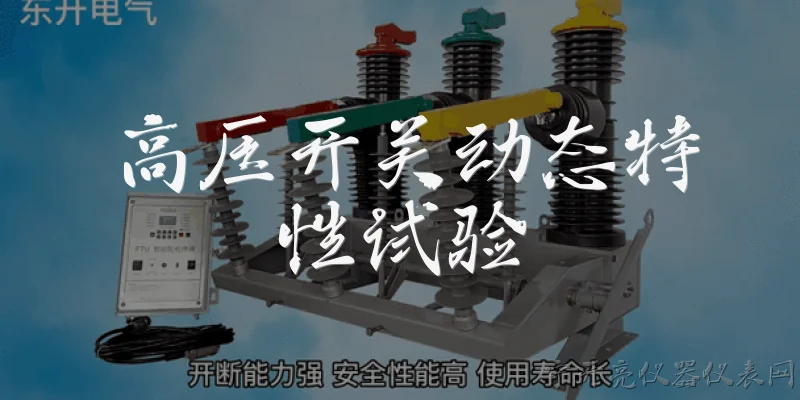
Dialogue about
Common scenarios of "High-voltage switch dynamic characteristic test"
【Senior Engineer】 Morning, team. Today we're conducting dynamic characteristic tests on the high-voltage switch. Before we begin, let's go over the test plan. Any questions?
【Junior Engineer】 Good morning. I've reviewed the plan. Could you clarify what parameters we're measuring exactly?
【Senior Engineer】 We'll measure closing time, opening time, opening speed, closing speed, and travel curve. These are critical for ensuring the switch operates correctly under fault conditions.
【Test Technician】 I've set up the circuit breaker analyzer and connected the travel transducer. Should I check the connections before we start?
【Senior Engineer】 Yes, please double-check all connections. A loose connection can give us false readings. Also, verify the power supply to the analyzer.
【Junior Engineer】 I noticed the ambient temperature is 25°C. Is that within the acceptable range for the test?
【Senior Engineer】 Yes, it's fine. But we need to record it. Temperature can affect the results slightly. Make sure to note it in the log.
【Test Technician】 Connections are secure. The analyzer is powered up and self-test passed. We're ready to proceed.
【Senior Engineer】 Great. Let's start with a no-load test. Open and close the switch manually to check the mechanical operation first.
【Junior Engineer】 I'll operate the manual handle. Opening now... closing... The switch moves smoothly.
【Senior Engineer】 Good. Now, let's perform the first automated test. Set the analyzer to record the closing operation. Technician, initiate the close command.
【Test Technician】 Initiating close command in 3...2...1... Close signal sent. The switch has closed. Analyzer is capturing data.
【Senior Engineer】 Let's review the closing time. It should be around 60 ms. What does the analyzer show?
【Junior Engineer】 The closing time is 62 ms. That's within the acceptable range.
【Senior Engineer】 Good. Now let's test the opening operation. Technician, initiate the open command.
【Test Technician】 Initiating open command. Open signal sent. The switch has opened. Data captured.
【Junior Engineer】 Opening time is 45 ms. The travel curve looks normal.
【Senior Engineer】 Excellent. Now, let's analyze the speed. Calculate the opening speed and closing speed from the travel curve.
【Junior Engineer】 Opening speed is 3.5 m/s, closing speed is 3.2 m/s. Both are within specifications.
【Senior Engineer】 Perfect. The dynamic characteristics are within tolerance. Let's document the results and prepare the report. Good work, everyone.