
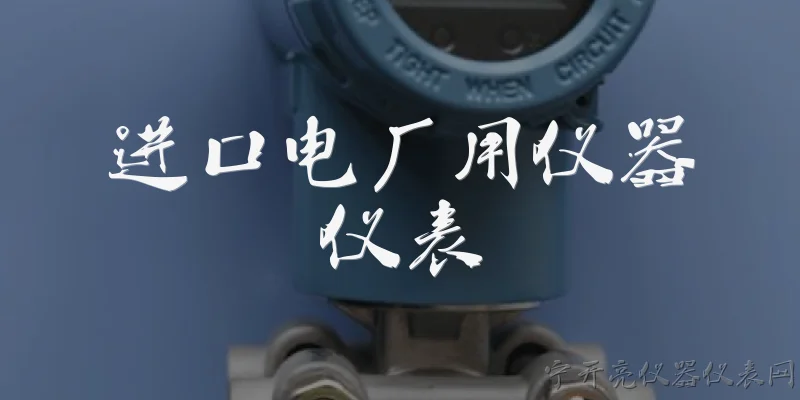
Imported Power Plant Instruments:What are imported power plant instruments and why are they important in power generation?
Q: What are imported power plant instruments and why are they important in power generation?
A: Imported power plant instruments are measurement and control devices sourced from foreign manufacturers for use in power generation facilities. They include sensors, transmitters, gauges, analyzers, and control systems used to monitor parameters like pressure, temperature, flow, and vibration. Their importance lies in ensuring accurate monitoring and safe operation of critical equipment such as turbines, boilers, and generators. High-precision imported instruments often provide superior reliability and accuracy compared to domestic alternatives, helping plants maintain efficiency, meet regulatory standards, and reduce downtime through dependable performance in demanding operating environments.
Q: What factors should be considered when selecting imported power plant instruments?
A: When selecting imported power plant instruments, consider accuracy class, environmental ratings (temperature, humidity, vibration, EMI), compatibility with existing control systems, and certification compliance (IEC, ANSI, ATEX for hazardous areas). Evaluate supplier reputation, after-sales support, spare parts availability, and lead times. Also assess total cost of ownership, including calibration and maintenance. Local service support and technical documentation in the required language are important. Compatibility with plant DCS or SCADA protocols such as HART, Modbus, or Profibus should be verified to ensure seamless integration and reliable long-term operation.
Q: What are common challenges with imported power plant instruments and how can they be mitigated?
A: Common challenges include long lead times, customs clearance delays, voltage and frequency mismatches, documentation gaps, and limited local technical support. Mitigation strategies include maintaining strategic spare parts inventory, establishing local service agreements with distributors, verifying power supply specifications before ordering, and ensuring complete calibration certificates and manuals are provided. Training local staff on installation and troubleshooting reduces dependency on foreign technicians. Engaging reputable agents and planning procurement well ahead of scheduled maintenance outages helps avoid project delays and ensures instrument availability when needed.
Q: How should imported power plant instruments be calibrated and maintained?
A: Imported power plant instruments should be calibrated according to manufacturer specifications and applicable standards, typically annually or per plant maintenance schedules. Use certified calibration equipment traceable to national standards. Maintain detailed records of calibration results, adjustments, and environmental conditions. For critical instruments, perform periodic verification between full calibrations. Store spare instruments properly to prevent drift or damage. Train technicians on specific imported models, and where possible, use manufacturer-recommended calibration software. Establishing a preventive maintenance program that includes inspection, cleaning, and functional testing ensures continued accuracy and extends instrument service life.
Q: What documentation and compliance requirements apply to imported power plant instruments?
A: Imported power plant instruments typically require certificates of origin, calibration certificates, material certificates, and compliance documents such as CE, IECEx, or ATEX declarations depending on application. Customs documentation including commercial invoices and packing lists is essential. For safety-critical instruments, third-party inspection certificates may be required. Technical manuals, wiring diagrams, and datasheets should be obtained in the plant's working language. Compliance with local electrical and safety regulations must be verified. Maintaining a complete document trail supports audits, warranty claims, and future procurement, and helps ensure regulatory acceptance during plant inspections.
Words of experience
Common scenarios of "Imported Power Plant Instruments"
【Procurement Manager】 Good morning, team. We need to discuss the procurement of instruments for the new power plant. The imported instruments are critical, and we need to ensure we select the right suppliers.
【Technical Engineer】 Absolutely. I've reviewed the specifications. We require high-precision pressure transmitters, temperature sensors, and flow meters. The imported brands have better reliability, but we must verify compatibility with our control systems.
【Procurement Manager】 Agreed. I've shortlisted three suppliers from Germany and Japan. Their products meet our technical requirements, but the lead times are long. We need to plan for that.
【Logistics Coordinator】 Lead times are a concern. Shipping from Europe or Asia can take 8-12 weeks, plus customs clearance. We should consider air freight for critical items, though it's more expensive.
【Finance Officer】 We need to budget for potential cost overruns. Import duties and taxes will add about 15% to the total cost. Also, currency fluctuations could impact the final price.
【Technical Engineer】 We also need to consider spare parts availability. Some imported instruments require proprietary parts, which can be costly and slow to procure. We should negotiate a spare parts package with the supplier.
【Procurement Manager】 Good point. I'll include that in the contract negotiations. Additionally, we should ask for training for our maintenance team to ensure proper handling and calibration.
【Logistics Coordinator】 I'll check with our freight forwarders for the best routes and estimated transit times. Also, we need to ensure proper packaging to prevent damage during transit.
【Finance Officer】 We should also explore payment terms. Can we negotiate a letter of credit to mitigate risks? And perhaps stagger payments upon delivery and acceptance.
【Procurement Manager】 Yes, I'll discuss payment terms with the suppliers. We'll aim for 30% advance, 60% upon shipment, and 10% after installation and commissioning.
【Technical Engineer】 One more thing: we need to verify the calibration certificates and ensure they meet international standards. Some suppliers provide ISO 17025 certification, which is a plus.
【Procurement Manager】 I'll request samples and test reports from the shortlisted suppliers. We can't afford any failures during commissioning.
【Logistics Coordinator】 I've received quotes from two freight forwarders. Air freight for urgent items would cost around $15,000, while sea freight is $5,000 but takes longer. We need to decide based on the project schedule.
【Finance Officer】 Let's allocate $20,000 for logistics to cover potential air freight for critical items. We'll include that in the budget.
【Technical Engineer】 I'll prepare a detailed technical evaluation matrix to compare the suppliers. We should also consider after-sales support and warranty terms.
【Procurement Manager】 Great. Let's schedule a follow-up meeting next week to review the supplier proposals. In the meantime, please gather all necessary documentation.
【Logistics Coordinator】 I'll also look into insurance options for the shipments. We need to cover potential damages during transit.
【Finance Officer】 I'll work on the total cost of ownership analysis, including installation, training, and maintenance over five years.
【Technical Engineer】 I'll contact the suppliers for clarifications on technical specifications and request references from similar power plant projects.
【Procurement Manager】 Excellent. We're on track. Let's reconvene next Tuesday at 10 AM. Thank you, everyone.