Trace gas components:What are the most common trace gas components monitored in 2026?
Q: What are the most common trace gas components monitored in 2026?
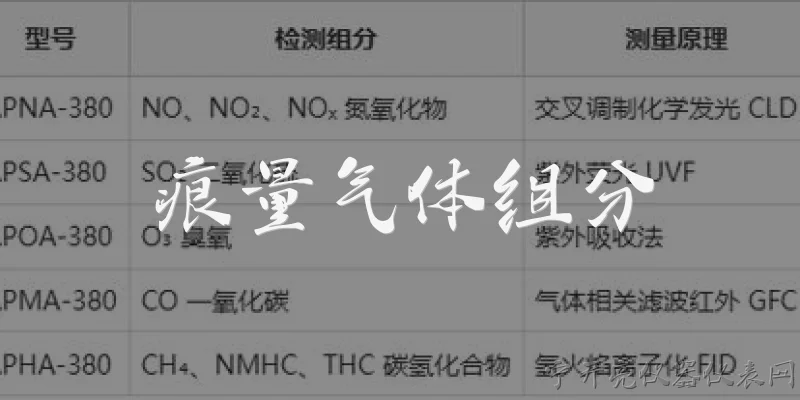
A: In 2026, the most commonly monitored trace gas components include carbon dioxide (CO2), methane (CH4), nitrous oxide (N2O), carbon monoxide (CO), sulfur dioxide (SO2), nitrogen oxides (NOx), ozone (O3), and volatile organic compounds (VOCs) such as benzene and formaldehyde. These gases are typically present in the atmosphere at concentrations below 1% by volume, often in the parts-per-million (ppm) or parts-per-billion (ppb) range. Monitoring priorities have shifted slightly toward methane and N2O due to their high global warming potentials, as well as VOCs for urban air quality and industrial safety. Emerging interest also focuses on hydrogen (H2) and ammonia (NH3) as potential clean energy carriers. Advanced sensor networks, satellite-based remote sensing (e.g., TROPOMI, OCO-2), and low-cost IoT devices now allow continuous, real-time tracking of these trace components across multiple scales.
Q: How are trace gas components measured in industrial and environmental applications in 2026?
A: In 2026, trace gas components are measured using a combination of advanced spectroscopic techniques, chromatographic methods, and sensor arrays. Key technologies include cavity ring-down spectroscopy (CRDS), tunable diode laser absorption spectroscopy (TDLAS), Fourier-transform infrared (FTIR) spectroscopy, and gas chromatography-mass spectrometry (GC-MS). For field deployment, portable and wireless sensors based on electrochemical, photoionization, and metal-oxide semiconductor principles are common. These devices often integrate machine learning algorithms to correct for cross-sensitivity and drift, improving accuracy in complex matrices. In industrial settings, real-time monitoring of trace gases like CO, H2S, and VOCs ensures worker safety and emission compliance. Environmental applications rely on networks of ground stations, drones, and satellites to track greenhouse gases and air pollutants. Calibration against certified reference materials and participation in inter-laboratory comparisons remain essential for data reliability. By 2026, many systems also feature cloud connectivity and automated reporting for regulatory and research purposes.
Q: Why are trace gas components important for climate change and air quality research in 2026?
A: Trace gas components play a critical role in climate change and air quality research in 2026 because even at low concentrations, they significantly influence atmospheric chemistry and Earth's radiative balance. Greenhouse gases like CO2, CH4, and N2O trap heat, with methane being over 80 times more potent than CO2 over a 20-year period. Their monitoring helps quantify emissions from natural and anthropogenic sources, track progress toward Paris Agreement targets, and validate climate models. Meanwhile, trace pollutants such as SO2, NOx, O3, and VOCs drive the formation of secondary aerosols and photochemical smog, impacting human health and ecosystems. In 2026, research focuses on understanding feedback loops—for example, how warming permafrost releases methane—and on identifying emission hotspots using satellite data. Advanced isotopic analysis distinguishes sources, while real-time sensor networks support early warning systems for air quality alerts. Overall, trace gas components are indispensable for developing mitigation strategies and protecting public health.
Dialogue about
Common scenarios of "Trace gas components"
【Interviewer】 Welcome to Science Today. I'm here with Dr. Elena Vasquez, an atmospheric chemist. We're discussing trace gas components. Dr. Vasquez, what exactly are trace gases?
【Dr. Elena Vasquez】 Trace gases are gases present in very small concentrations in the atmosphere, typically less than 1% by volume. Despite their low abundance, they play crucial roles in climate, air quality, and atmospheric chemistry.
【Interviewer】 Can you give some examples of important trace gases?
【Dr. Elena Vasquez】 Certainly. Key examples include carbon dioxide (CO2), methane (CH4), ozone (O3), nitrogen oxides (NOx), sulfur dioxide (SO2), and volatile organic compounds (VOCs). Each has different sources and impacts.
【Interviewer】 How do trace gases influence climate change?
【Dr. Elena Vasquez】 Many trace gases are greenhouse gases. For instance, CO2 and methane trap heat in the atmosphere, leading to global warming. Others like ozone in the troposphere also contribute to warming, while aerosols can have cooling effects.
【Interviewer】 What about air quality? How do trace gases affect it?
【Dr. Elena Vasquez】 Trace gases like nitrogen dioxide (NO2), sulfur dioxide (SO2), and ground-level ozone are major air pollutants. They can cause respiratory problems in humans and harm ecosystems. VOCs can also react to form secondary pollutants like ozone.
【Interviewer】 Where do these trace gases come from?
【Dr. Elena Vasquez】 Sources are both natural and anthropogenic. Natural sources include volcanic eruptions, wetlands, and vegetation. Human activities such as burning fossil fuels, agriculture, and industrial processes significantly contribute to trace gas emissions.
【Interviewer】 How are trace gases measured?
【Dr. Elena Vasquez】 We use various techniques: ground-based stations, satellites, aircraft, and balloons. Instruments like gas chromatographs, mass spectrometers, and spectroscopic sensors detect and quantify trace gases at very low concentrations.
【Interviewer】 What are some challenges in studying trace gases?
【Dr. Elena Vasquez】 Their low concentrations make measurement difficult. They also have short lifetimes and variable distributions. Additionally, interactions between different trace gases and with the broader atmosphere are complex, requiring sophisticated models.
【Interviewer】 Are there any recent discoveries or concerns about trace gases?
【Dr. Elena Vasquez】 Yes, we're finding unexpected sources, like methane emissions from thawing permafrost. Also, the increase in ozone-depleting substances like CFCs, though regulated, still requires monitoring. Emerging concerns include the impact of VOCs on urban air quality.
【Interviewer】 What can be done to reduce harmful trace gas emissions?
【Dr. Elena Vasquez】 Mitigation strategies include transitioning to renewable energy, improving industrial efficiency, implementing catalytic converters in vehicles, and adopting agricultural practices that reduce methane and nitrous oxide emissions. International agreements like the Montreal Protocol and Paris Agreement also help.
【Interviewer】 Thank you, Dr. Vasquez. This has been very informative.
【Dr. Elena Vasquez】 My pleasure. It's important for the public to understand the significance of these trace components in our atmosphere.