Cable AC withstand voltage test wiring:What is the correct wiring procedure for a cable AC withstand voltage test?
Q: What is the correct wiring procedure for a cable AC withstand voltage test?
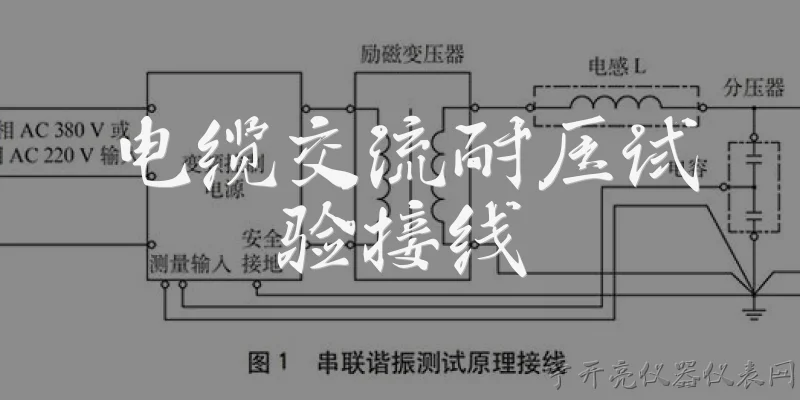
A: The correct wiring procedure for a cable AC withstand voltage test involves several critical steps. First, ensure the cable is completely disconnected from all power sources and loads, and verify isolation using a voltage detector. Next, connect the high-voltage output terminal of the AC test set to the conductor of the cable under test. The ground terminal of the test set must be connected to the cable's metallic shield or armor, and also to a reliable earth ground. If the cable has multiple conductors, each phase should be tested individually while the other conductors are grounded. For a three-core cable, short the other two conductors together and ground them during the test of one conductor to avoid induced voltages. Additionally, connect a voltage divider or kilovoltmeter across the test terminals for accurate voltage measurement. Ensure all connections are tight and free of corona discharge points. Finally, double-check the wiring against the test set manual and safety standards before energizing. Proper wiring is essential to prevent flashover, equipment damage, and personal injury.
Q: Why is the grounding configuration critical in cable AC withstand voltage test wiring?
A: The grounding configuration is critical in cable AC withstand voltage test wiring for several reasons. First, it ensures safety: a proper ground provides a low-resistance path for fault current, protecting personnel and equipment if insulation breaks down during the test. Second, grounding the cable's metallic shield and unused conductors prevents induced voltages and capacitive coupling that can cause erroneous measurements or damage. In a three-core cable, if unused conductors are left floating, they can rise to dangerous potentials due to electrostatic induction from the tested conductor, leading to flashover. Third, the test set's ground terminal must be connected to a solid earth ground to stabilize the high-voltage output and prevent the test voltage from floating. Without proper grounding, the test results may be invalid, and the risk of electric shock increases significantly. Therefore, always follow manufacturer guidelines and industry standards such as IEC 60502 or IEEE 400.2, which specify grounding requirements for AC withstand voltage tests. Never rely on the cable's return path as a ground; use a dedicated grounding conductor.
Q: What are common wiring mistakes to avoid in cable AC withstand voltage tests?
A: Common wiring mistakes in cable AC withstand voltage tests include: 1) Forgetting to ground the cable's metallic shield and unused conductors, which can cause induced high voltages and safety hazards. 2) Using inadequate grounding conductors that are too long or thin, resulting in high impedance and ineffective fault current diversion. 3) Connecting the test set's ground terminal to the cable's conductor instead of earth ground, which can damage equipment and produce incorrect results. 4) Leaving the cable's far end unguarded or ungrounded, allowing dangerous voltages to appear where personnel might contact. 5) Failing to discharge the cable after the test before handling, leading to residual charge shock. 6) Mixing up phase and ground connections, especially in multi-core cables, which can short-circuit the test set. 7) Not using a voltage divider or calibrated meter, leading to inaccurate voltage application. 8) Ignoring corona or leakage effects from poor connections. To avoid these, always follow a written procedure, use properly rated cables and connectors, and double-check wiring before energizing. Regular training and adherence to standards like IEC 60060-1 are essential.
Dialogue about
Common scenarios of "Cable AC withstand voltage test wiring"
【Trainee】 张工,今天我们要进行10kV电缆的交流耐压试验,我负责接线,你能指导我一下吗?
【Engineer】 没问题。首先,确保试验设备已经可靠接地,接地线要连接牢固。
【Trainee】 好的,我已经把接地线接好了。接下来需要连接电源吗?
【Engineer】 是的,将电源线接入调压器的输入端,注意相线和零线不能接反。
【Trainee】 电源接好了,调压器输出端应该接哪里?
【Engineer】 调压器的输出端接到试验变压器的低压侧。
【Trainee】 试验变压器的高压侧呢?
【Engineer】 高压侧的一端接到电缆的导体上,另一端接地。
【Trainee】 电缆的另一端需要怎么处理?
【Engineer】 电缆的另一端所有导体要短接并接地,同时要确保电缆终端头清洁干燥。
【Trainee】 好的,我已经把另一端短接接地了。还需要注意什么?
【Engineer】 在高压侧和地之间要并联一个测量电压的电容分压器,以便监测试验电压。
【Trainee】 分压器接好了。过流保护需要设置吗?
【Engineer】 当然,过流保护应设置在试验电流的1.1倍左右,确保设备安全。
【Trainee】 设置好了。现在可以开始升压了吗?
【Engineer】 等等,先检查所有接线是否牢固,人员撤离到安全区域,然后才能升压。
【Trainee】 检查完毕,人员已撤离。
【Engineer】 好,现在可以合上电源开关,缓慢升压,注意观察电压表和电流表。
【Trainee】 电压升到10kV了,保持1分钟吗?
【Engineer】 对,保持1分钟,然后降压到零,断开电源,放电后再拆线。