Single-phase smart meter calibration bench:What is a single-phase smart meter calibration bench and what does it do?
Q: What is a single-phase smart meter calibration bench and what does it do?
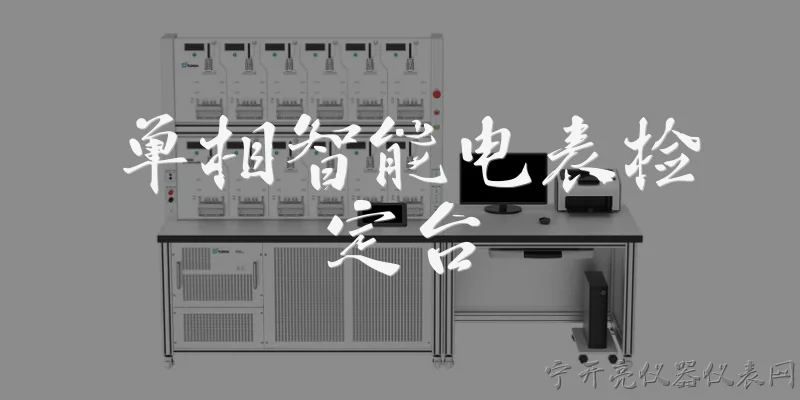
A: A single-phase smart meter calibration bench is a specialized testing system used to verify and adjust the accuracy of single-phase smart electricity meters. It typically consists of a programmable power source, a reference standard meter with higher accuracy than the meters under test, a mounting rack for multiple meter positions, and control software that automates the testing process. The bench applies precise voltage and current signals to each meter and compares the meter's energy registration against the reference standard. Any deviation is recorded, and the bench can issue calibration commands to adjust the meter's internal parameters so that its error falls within acceptable limits. Modern benches often support automatic handling, barcode scanning, and data logging, which makes them suitable for high-volume production lines as well as utility metrology laboratories. In essence, the calibration bench ensures that smart meters comply with national and international standards such as IEC 62053-21 or GB/T 17215, helping utilities maintain fair billing and reliable grid measurement.
Q: What are the key technical specifications to consider when choosing a single-phase smart meter calibration bench?
A: When selecting a single-phase smart meter calibration bench, several technical specifications are critical. First, the accuracy class of the reference standard should be at least three times better than the meters being tested; for Class 1 meters, a 0.1 or 0.05 class reference is common. Second, the output range of voltage and current must cover the meter's operating range, typically 0–300 V and 0–120 A, with fine adjustment capability. Third, the number of meter positions determines throughput; benches can range from a few positions to 60 or more, so choose based on your production volume. Fourth, the bench should support various test points, including basic error, starting current, no-load condition, and influence quantities like voltage variation and harmonic distortion. Fifth, communication interfaces are essential for smart meters; the bench should handle RS-485, infrared, PLC, and possibly wireless protocols to read meter data and send calibration commands. Finally, consider the software's automation level, data management, and compliance with relevant standards such as IEC 62053-21. Reliability, after-sales support, and the ability to upgrade for future meter types are also important factors.
Q: How do you perform calibration using a single-phase smart meter calibration bench?
A: Calibrating a single-phase smart meter on a calibration bench involves several systematic steps. First, prepare the bench by warming it up and verifying the reference standard's accuracy. Mount the meters securely on the bench positions and connect voltage, current, and communication lines according to the wiring diagram. Next, configure the test plan in the software: set test points such as 100% Ib, 5% Ib, power factor 1.0 and 0.5L, and specify the allowed error limits. Start the test; the bench will apply the programmed voltage and current and compare each meter's pulse output or register reading with the reference. The software records errors and flags any meter outside tolerance. For meters that require adjustment, the bench can automatically send correction commands via the communication interface to modify the meter's calibration coefficients. After adjustment, rerun the test to confirm all points are within limits. Finally, generate a calibration certificate and log the results. Regular maintenance and periodic verification of the bench itself are necessary to ensure ongoing accuracy and compliance with standards like IEC 62053-21.
Words of experience
Common scenarios of "Single-phase smart meter calibration bench"
【Technician】 Good morning! I'm here to calibrate the single-phase smart meters. Is the calibration bench ready?
【Engineer】 Good morning! Yes, the bench is powered up and warmed up. I've already loaded the test plan for the 20 meters.
【Technician】 Great. Let's start with the basic accuracy test at 100% rated current. Can you confirm the reference meter is calibrated?
【Engineer】 The reference meter was calibrated last month and has a valid certificate. I'll set the voltage to 220V and current to 5A.
【Technician】 Perfect. I'll connect the meters to the test sockets. Do we need to check the pulse output first?
【Engineer】 Yes, let's verify the pulse constant. The meters are 1000 imp/kWh. I'll set the bench to count pulses for 10 seconds.
【Technician】 Connections are secure. I'm seeing the pulse LEDs blinking on all meters. Ready when you are.
【Engineer】 Starting the test now. The bench is applying 220V, 5A, unity power factor. Let's monitor the error percentages.
【Technician】 I see errors ranging from -0.2% to +0.3%. That's within the ±0.5% accuracy class. Good.
【Engineer】 Agreed. Now let's test at 5% rated current, which is 0.25A. This checks the starting current and low-load accuracy.
【Technician】 I'll adjust the current source. The meters should still register. I'm seeing some errors up to +0.8%.
【Engineer】 That's still within the ±1.0% limit for low current. But let's note the meter with +0.8% for further inspection.
【Technician】 Noted. Next, let's test the power factor influence. Set PF to 0.5 lagging at 100% current.
【Engineer】 Setting PF to 0.5 lag. The errors are now between -0.3% and +0.4%. Acceptable.
【Technician】 Now let's check the meter constants and ensure the calibration coefficients are written correctly.
【Engineer】 I'll read the calibration coefficients via the optical port. They match the expected values within tolerance.
【Technician】 Good. Finally, let's run a quick test for tamper detection and reverse current. Do we have that in the plan?
【Engineer】 Yes, I'll simulate a reverse current condition. The meters should either stop or record it as tamper, depending on the model.
【Technician】 I see the tamper LED on meter 7 is lit. That's expected. All others are functioning normally.
【Engineer】 Great. We've completed all tests. I'll generate the calibration report and mark the meters as calibrated. Good job!