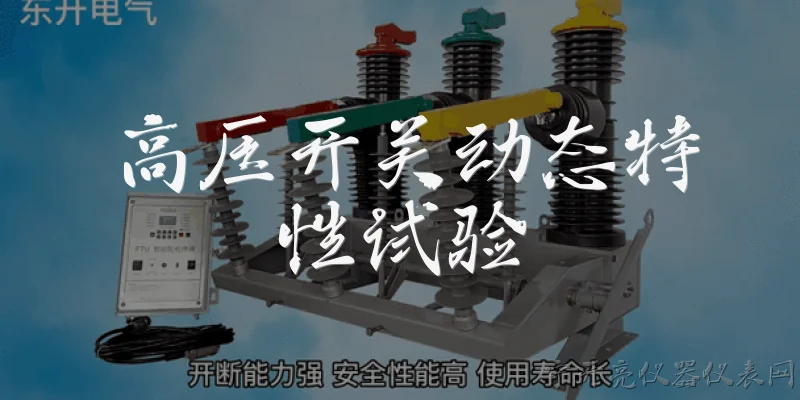
High-voltage equipment parameter measurement system:What is a high-voltage equipment parameter measurement system?
Q: What is a high-voltage equipment parameter measurement system?
A: A high-voltage equipment parameter measurement system is a specialized setup designed to accurately measure electrical parameters such as voltage, current, resistance, capacitance, and dielectric loss in high-voltage apparatus like transformers, circuit breakers, and cables. These systems typically include high-precision sensors, data acquisition units, and isolation components to ensure safety and accuracy. They are essential for testing insulation performance, detecting partial discharges, and verifying equipment compliance with standards. By providing real-time monitoring and detailed analysis, such systems help prevent failures, extend equipment lifespan, and ensure reliable operation of power grids. They are widely used in power plants, substations, and research laboratories for both routine maintenance and diagnostic testing.
Q: What are the key components of a high-voltage equipment parameter measurement system?
A: Key components include high-voltage dividers or sensors for scaling down signals, isolation amplifiers to protect low-voltage electronics, and data acquisition modules with high sampling rates and resolution. A control unit manages measurement sequences and synchronizes data. Software for analysis and visualization is also critical, enabling computation of parameters like power factor or harmonic distortion. Additionally, calibration standards and shielding are necessary to minimize interference. Safety features such as grounding and interlock systems are integrated to protect operators. The system may also incorporate fiber-optic links for noise immunity. Together, these components ensure precise, safe, and reliable measurement of high-voltage equipment parameters in various testing scenarios.
Q: Why is it important to measure parameters of high-voltage equipment regularly?
A: Regular measurement of high-voltage equipment parameters is vital for preventive maintenance and safety. Over time, factors like thermal stress, moisture, and electrical aging can degrade insulation, leading to failures that cause costly outages or hazards. By monitoring parameters such as leakage current, capacitance, and dissipation factor, operators can detect early signs of deterioration and schedule timely repairs. This practice also ensures compliance with industry standards and regulations, avoiding penalties. Moreover, accurate data helps optimize equipment performance and lifespan, reducing replacement costs. In critical infrastructure like power grids, regular testing prevents cascading failures and enhances overall reliability. Thus, it is a cornerstone of asset management in high-voltage environments.
Q: How does a high-voltage equipment parameter measurement system ensure safety during testing?
A: Safety is ensured through multiple layers. First, isolation is achieved using high-voltage dividers, transformers, or fiber-optic links to separate the high-voltage side from low-voltage control and data acquisition. Second, grounding and shielding techniques prevent accidental contact and reduce electromagnetic interference. Third, interlock systems and warning indicators disable power when enclosures are opened. Fourth, remote operation allows personnel to stay at a safe distance. Fifth, the system includes surge protection and failsafe mechanisms to handle unexpected overvoltages. Finally, rigorous testing protocols and trained operators follow standard procedures. These measures collectively minimize risks of electric shock, arc flash, and equipment damage, making high-voltage parameter measurement safe and reliable in industrial and laboratory settings.
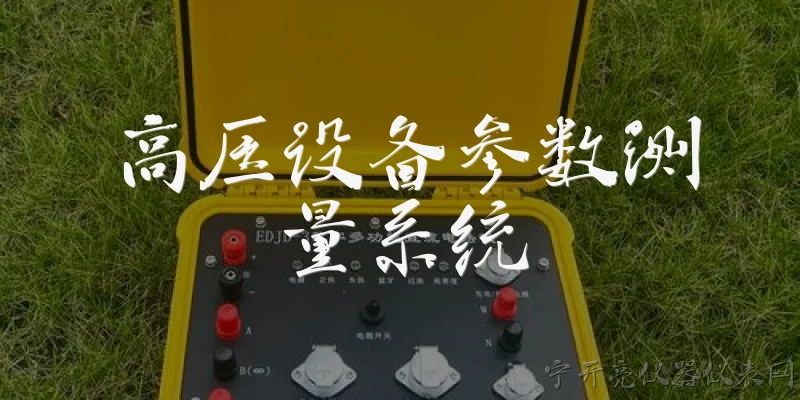
Dialogue about
Common scenarios of "High-voltage equipment parameter measurement system"
【Electrical Engineer】 Good morning. I've been reviewing the specs for the new high-voltage equipment parameter measurement system. Can you walk me through its key capabilities?
【System Designer】 Absolutely. The system is designed to measure parameters like voltage, current, power, and insulation resistance for equipment up to 1000 kV. It uses non-contact sensors and real-time data processing.
【Electrical Engineer】 That's impressive. How does it handle the high voltage environment safely?
【System Designer】 Safety is paramount. The system employs fiber-optic isolation and surge protection. All sensors are galvanically isolated, and the control unit is at ground potential.
【Electrical Engineer】 What about accuracy? We need precise measurements for condition monitoring.
【System Designer】 The accuracy is within ±0.1% for voltage and current, and ±0.2% for power. It uses high-precision ADCs and temperature compensation to maintain accuracy over a wide range.
【Electrical Engineer】 How does it handle electromagnetic interference? High-voltage environments are noisy.
【System Designer】 We use shielding, filtering, and differential signal transmission. Also, the fiber-optic links eliminate ground loops and reduce EMI susceptibility.
【Electrical Engineer】 Can you describe the data acquisition and processing pipeline?
【System Designer】 Sure. Sensors feed into a high-speed multiplexer, then to a 24-bit ADC. The digital data is processed by an FPGA for real-time calculations and then sent to a host computer via Ethernet.
【Electrical Engineer】 What sampling rate does it support?
【System Designer】 The maximum sampling rate is 100 kS/s per channel. For most condition monitoring applications, 10 kS/s is sufficient, but we can go higher for transient analysis.
【Electrical Engineer】 Does it support synchronized multi-channel measurements?
【System Designer】 Yes, all channels are synchronized within 1 nanosecond using a common clock and trigger distribution system.
【Electrical Engineer】 What about software? Is there an API for integration with our SCADA system?
【System Designer】 The system comes with a comprehensive software suite including a REST API and Modbus TCP support. We also provide LabVIEW and Python drivers.
【Electrical Engineer】 How is the system calibrated? We need traceable calibration.
【System Designer】 It supports automatic self-calibration using internal references, and can be calibrated externally with a high-voltage calibrator. We provide calibration certificates traceable to NIST standards.
【Electrical Engineer】 What are the environmental operating conditions?
【System Designer】 The system operates from -20°C to 55°C, with humidity up to 95% non-condensing. It's designed for indoor and outdoor use with appropriate enclosures.