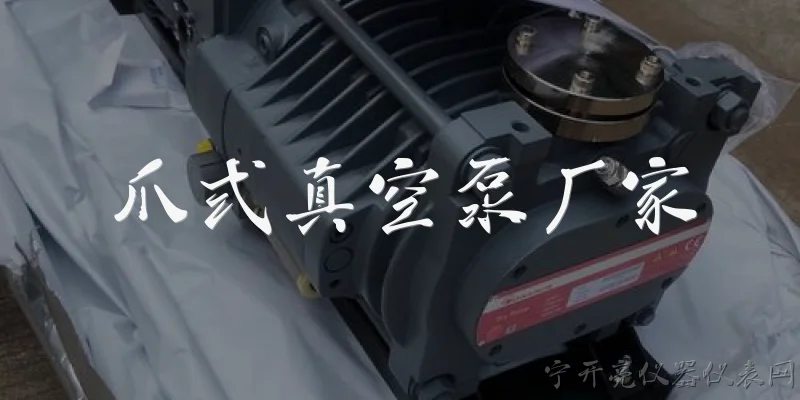
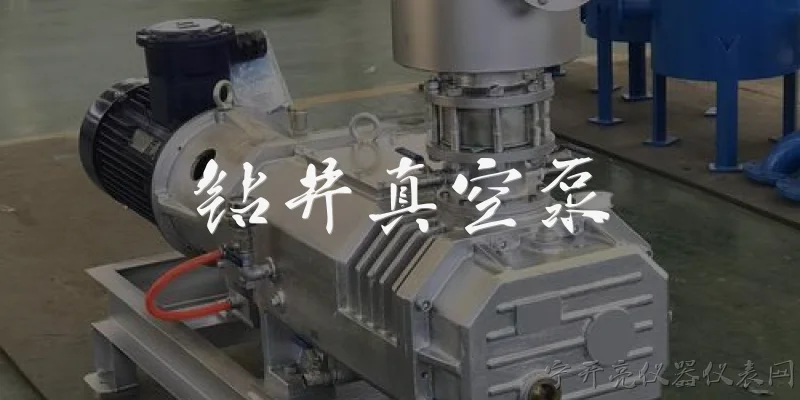
Vacuum pump models:What are the main types of vacuum pump models available?
Q: What are the main types of vacuum pump models available?
A: Vacuum pump models are generally classified into several key categories based on their operating principles. The primary types include rotary vane pumps, which are commonly used for low to medium vacuum applications; diaphragm pumps, ideal for oil-free and contamination-sensitive processes; scroll pumps, known for clean and quiet operation; and turbomolecular pumps, which achieve high and ultra-high vacuum levels. Additionally, there are diffusion pumps for high vacuum, cryogenic pumps that use low temperatures, and ion pumps for ultra-high vacuum environments. Each model type has specific advantages depending on the required vacuum level, pumping speed, and application. For instance, rotary vane pumps are robust and cost-effective for general laboratory use, while turbomolecular pumps are essential in semiconductor manufacturing and mass spectrometry. Understanding these categories helps in selecting the right vacuum pump model for a given task.
Q: How do I choose the right vacuum pump model for my application?
A: Choosing the right vacuum pump model depends on several critical factors. First, determine the required vacuum level: rough vacuum (above 1 mbar), medium vacuum (1 to 10^-3 mbar), high vacuum (10^-3 to 10^-7 mbar), or ultra-high vacuum (below 10^-7 mbar). Second, consider the pumping speed needed for your chamber size and gas load. Third, evaluate the type of gases being pumped—corrosive, condensable, or particulate-laden gases may require special models like dry pumps or chemical-resistant versions. Fourth, assess maintenance requirements and operating costs; oil-sealed pumps need regular oil changes, while oil-free models reduce contamination risks. Finally, check compatibility with your system's connections and ambient conditions. Consulting a vacuum pump catalog or manufacturer's selection guide can help match specifications to your needs. Always prioritize reliability and efficiency for your specific process.
Q: What are the common model naming conventions for vacuum pumps?
A: Vacuum pump models often follow specific naming conventions that indicate key specifications. For example, a model like 'RV12' might denote a rotary vane pump with a pumping speed of 12 m³/h. Similarly, 'TPU 261' could represent a turbomolecular pump with a certain flange size and speed. Manufacturers like Pfeiffer, Edwards, and Leybold use alphanumeric codes where letters indicate the pump type (e.g., 'RV' for rotary vane, 'TM' for turbo molecular) and numbers represent performance metrics such as pumping speed, ultimate pressure, or motor power. Some models include suffixes for voltage or special features, like 'C' for corrosive gas handling. It's important to consult the manufacturer's datasheet to decode these conventions accurately. Understanding these naming patterns helps in comparing models across brands and ensuring you select the correct pump for your system's requirements.
Q: What maintenance is required for different vacuum pump models?
A: Maintenance requirements vary significantly across vacuum pump models. Oil-sealed rotary vane pumps need regular oil changes—typically every 3,000 hours or based on contamination levels—along with oil filter replacements and checks for wear on vanes. Diaphragm pumps require periodic replacement of diaphragms and valves, usually every 10,000 to 15,000 hours, and inspection for leaks. Scroll pumps need tip seal replacement every few years and occasional cleaning of the scroll mechanism. Turbomolecular pumps have bearing replacement intervals, often every 20,000 to 30,000 hours, and require careful handling to avoid rotor damage. Dry pumps like screw or claw types need less frequent maintenance but still require seal and bearing checks. Always follow the manufacturer's maintenance schedule, keep records, and use original spare parts to ensure optimal performance and longevity of your vacuum pump model.
Dialogue about
Common scenarios of "Vacuum pump models"
【Customer】 Hi, I'm looking for a vacuum pump for my laboratory. I need to achieve a vacuum of about 0.1 mbar. Can you recommend some models?
【Sales Representative】 Certainly! For that level of vacuum, you might consider a rotary vane pump. Our model RV-3 can reach 0.1 mbar and is quite popular in labs.
【Customer】 That sounds promising. What's the pumping speed of the RV-3?
【Sales Representative】 The RV-3 has a pumping speed of 3 m³/h. If you need higher speed, we also have the RV-6 with 6 m³/h.
【Customer】 I think 3 m³/h might be sufficient. Is it oil-sealed?
【Sales Representative】 Yes, it's oil-sealed. It requires regular oil changes, but it's very reliable. We also offer oil-free models if you prefer.
【Customer】 Oil-free would be nice to avoid maintenance. What do you have in that range?
【Sales Representative】 We have the Diaphragm Pump DP-2. It's oil-free, reaches 0.5 mbar, and has a pumping speed of 2 m³/h. However, it might not reach 0.1 mbar.
【Customer】 0.5 mbar is not enough for my application. I really need 0.1 mbar or lower.
【Sales Representative】 In that case, you might want to consider a two-stage rotary vane pump. Our model RV-3D is two-stage and can reach 0.01 mbar. It's oil-sealed but very efficient.
【Customer】 0.01 mbar is great. What about the pumping speed of the RV-3D?
【Sales Representative】 It's 3 m³/h, same as the single-stage RV-3. But because it's two-stage, it achieves lower ultimate pressure.
【Customer】 Is it noisy? My lab is sensitive to noise.
【Sales Representative】 The RV-3D operates at about 50 dB, which is relatively quiet. We also offer acoustic enclosures if needed.
【Customer】 That's good. What about the price?
【Sales Representative】 The RV-3D is priced at $2,500. It comes with a one-year warranty and free shipping within the US.
【Customer】 That's a bit higher than I expected. Do you have any refurbished units?
【Sales Representative】 We occasionally have refurbished models. Currently, we have a refurbished RV-3D for $1,800 with a six-month warranty.
【Customer】 That could work. Can you send me the specifications and a quote?
【Sales Representative】 Absolutely. I'll email you the details shortly. Is there anything else you need?
【Customer】 No, that's all for now. Thank you!
【Sales Representative】 You're welcome! I'll send the info right away. Have a great day!