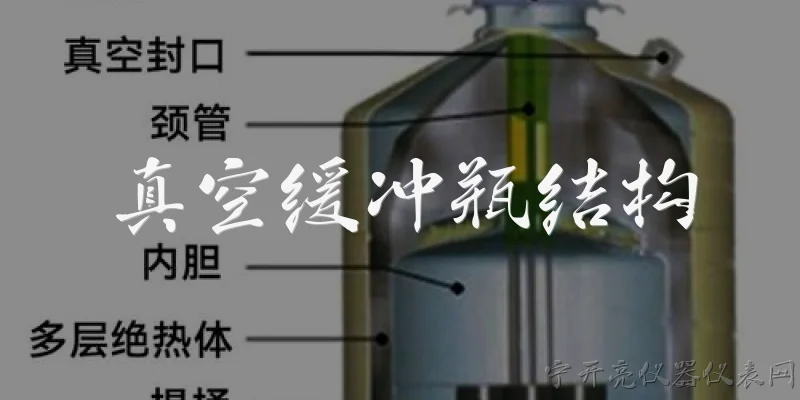
Vacuum buffer bottle structure:What is the typical structure of a vacuum buffer bottle?
Q: What is the typical structure of a vacuum buffer bottle?
A: A vacuum buffer bottle typically consists of a rigid outer shell, often made of glass or high-strength plastic, designed to withstand external pressure. Inside, there is a hollow chamber that holds the buffer liquid or gas. The bottle features a vacuum port, usually a glass or metal tube, connected to a vacuum pump. A sealing mechanism, such as a ground-glass joint or O-ring, ensures airtightness. Some designs include an inner diaphragm or bellows to separate the vacuum from the buffer, preventing contamination. Additionally, a pressure relief valve may be present to avoid over-vacuum. The overall structure balances mechanical strength, chemical inertness, and leak-tight sealing to maintain a stable vacuum environment for applications like sample storage or degassing.
Q: How does the vacuum port integrate into the buffer bottle structure?
A: The vacuum port is a critical component of the buffer bottle structure, typically located at the top or side of the bottle. It often consists of a metal or glass tube fused into the bottle wall or connected via a ground-glass joint. The port allows connection to a vacuum pump or line. In many designs, the port includes a stopcock or valve to isolate the vacuum when needed. The internal end of the port may extend into the bottle to prevent liquid from being drawn out. Sealing is achieved with vacuum grease or O-rings. The port's integration must ensure no leaks and withstand pressure differentials. Some advanced structures use a dual-port design: one for vacuum and one for inert gas purging. Proper integration ensures efficient evacuation and safe operation.
Q: What materials are used for the structure of a vacuum buffer bottle?
A: The structure of a vacuum buffer bottle requires materials that are strong, chemically resistant, and vacuum-compatible. Common choices include borosilicate glass, which offers excellent transparency and thermal shock resistance, and heavy-wall glass for higher vacuum. For plastic variants, polycarbonate or PTFE are used due to their durability and inertness. Metal bottles, such as stainless steel, are employed for high-pressure or rugged applications. Seals and joints often use Viton or silicone O-rings, while vacuum grease is silicone-based. The choice depends on the buffer's chemical nature and vacuum level. Glass is preferred for visual inspection, while plastics reduce breakage risk. The material must also minimize outgassing to maintain vacuum stability.
Q: What safety features are incorporated into vacuum buffer bottle structures?
A: Vacuum buffer bottles incorporate several safety features to prevent implosion or contamination. First, the outer shell is often reinforced with a protective coating or mesh to contain fragments if the bottle breaks. A pressure relief valve or burst disc may be included to release excessive vacuum or pressure. Ground-glass joints are designed to prevent accidental disconnection. Some structures have a secondary containment chamber or shield. Additionally, the bottle may feature a weighted base for stability and a handle for safe handling. The vacuum port often includes a filter to trap particles and protect the pump. For hazardous buffers, double-walled designs with an inert gas blanket are used. These features ensure safe operation under vacuum, reducing risks to users and equipment.
Words of experience
Common scenarios of "Vacuum buffer bottle structure"
【Engineering Student】 Professor, I've been reading about vacuum systems and keep seeing the term 'vacuum buffer bottle.' Could you explain what it is and why its structure matters?
【Professor】 Great question. A vacuum buffer bottle is essentially a chamber placed between a vacuum pump and the system it's evacuating. Its main purpose is to stabilize pressure fluctuations and prevent sudden surges from damaging the pump or the process. The structure directly affects how well it performs these tasks.
【Engineering Student】 So it's like a shock absorber for vacuum lines? What are the key structural components?
【Professor】 Exactly. Key components include the main cylindrical body, inlet and outlet ports, internal baffles or partitions, and sometimes a condensate trap or filter. The arrangement of these parts determines flow dynamics and pressure damping.
【Engineering Student】 Why is the shape usually cylindrical rather than, say, spherical or rectangular?
【Professor】 Cylindrical shapes are preferred because they distribute stress evenly under vacuum, are easier to manufacture, and offer good volume-to-surface ratio. Spherical vessels are stronger but harder to connect to piping, while rectangular ones can have stress concentration points.
【Engineering Student】 I see. What about the internal baffles—how do they influence performance?
【Professor】 Baffles break up laminar flow and promote mixing, which helps damp pressure oscillations. They also trap particles or droplets, preventing them from reaching the pump. The number, placement, and orientation of baffles are critical for optimizing buffer performance.
【Engineering Student】 Are there different types of buffer bottles for different applications?
【Professor】 Yes. For high-vacuum systems, you might use a simple empty chamber with minimal internal structures to avoid outgassing. For rough vacuum or dirty processes, you'd include baffles, filters, and drain ports. Some are even cooled to condense vapors.
【Engineering Student】 What materials are typically used?
【Professor】 Stainless steel is common for its strength and low outgassing. Glass is used for small-scale or corrosive applications where visibility is needed. Aluminum is lighter but can outgas more. The choice depends on vacuum level, chemical compatibility, and cost.
【Engineering Student】 How does the volume of the buffer bottle affect its function?
【Professor】 Larger volume provides better damping because it acts as a larger reservoir to absorb pressure spikes. However, it also takes longer to evacuate and costs more. The optimal volume depends on pump speed, system dynamics, and required pressure stability.
【Engineering Student】 Could you explain the role of the inlet and outlet port design?
【Professor】 Inlet and outlet ports should be sized to minimize pressure drop and turbulence. Often they're positioned to create a tangential flow, which helps separate particles. Using flanges or KF fittings ensures leak-tight connections, which is vital for maintaining vacuum.
【Engineering Student】 What about condensation or liquid accumulation inside? How is that managed structurally?
【Professor】 Good point. A sloped bottom or a sump with a drain valve allows liquids to collect and be removed without breaking vacuum. Some designs include a demister or coalescing filter to capture aerosols before they reach the pump.
【Engineering Student】 Are there any safety considerations in the structure, like implosion protection?
【Professor】 Absolutely. Under vacuum, the bottle is subjected to external pressure, so it must be designed to withstand implosion. That means using thick walls, avoiding sharp corners, and sometimes adding a protective cage or shroud, especially for glass bottles.
【Engineering Student】 How do you test or validate the structural integrity of a buffer bottle?
【Professor】 We perform hydrostatic pressure tests, helium leak tests, and sometimes finite element analysis to simulate stress distribution. For critical applications, we also do cyclic fatigue testing to ensure long-term reliability.
【Engineering Student】 What are some common failure modes related to the structure?
【Professor】 Leaks at welds or fittings, implosion due to material fatigue, clogging from accumulated debris, and corrosion. Regular maintenance and proper material selection mitigate these risks.
【Engineering Student】 Can you give an example of how a buffer bottle is integrated into a real vacuum system?
【Professor】 Sure. In a freeze-drying system, the buffer bottle sits between the drying chamber and the vacuum pump. It traps water vapor that escapes the chamber, preventing it from contaminating the pump oil. Its internal baffles and cold trap enhance moisture capture.
【Engineering Student】 That makes sense. So the structure is tailored to the specific contaminants and pressure ranges?
【Professor】 Precisely. There's no one-size-fits-all. Engineers must consider the process gas, flow rate, vacuum level, and maintenance access when designing the buffer bottle's structure.
【Engineering Student】 What about scaling—does a larger system require a proportionally larger buffer bottle?
【Professor】 Not always linearly. Scaling depends on pump characteristics and system impedance. Sometimes multiple smaller bottles in parallel are more effective than one large one, especially for retrofits or space constraints.
【Engineering Student】 Are there any recent innovations in buffer bottle design?
【Professor】 Yes, some designs now incorporate internal sensors for real-time pressure and temperature monitoring, and modular components for easy cleaning. Additive manufacturing allows complex internal geometries that optimize flow and separation.
【Engineering Student】 That's fascinating. Could you recommend any resources for deeper study?
【Professor】 I'd suggest 'Handbook of Vacuum Technology' by Hoffmann, and papers from the American Vacuum Society. Also, look at manufacturer catalogs—they often include detailed structural diagrams and specifications.
【Engineering Student】 Thank you, Professor. I feel much more confident about the topic now.
【Professor】 You're welcome. Remember, the buffer bottle may seem simple, but its structure is a fine balance of mechanics, fluid dynamics, and materials science. Keep exploring!