Intelligent packaged water supply equipment:What is intelligent packaged water supply equipment and how does it work?
Q: What is intelligent packaged water supply equipment and how does it work?
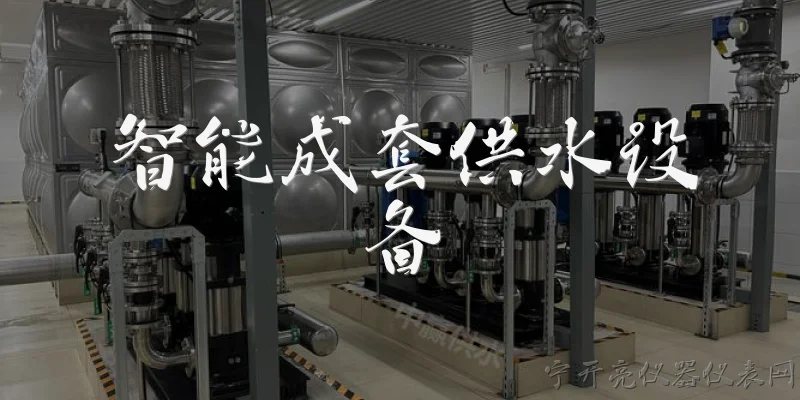
A: Intelligent packaged water supply equipment is a fully integrated, prefabricated pumping station that combines a water pump, motor, control cabinet, pressure sensors, and piping into a single compact unit. Unlike traditional concrete pump rooms that require on-site construction, this equipment is factory-assembled, tested, and delivered as a complete package ready for quick installation. The system works by using variable frequency drives (VFDs) and a programmable logic controller (PLC) to monitor real-time water pressure and flow demand. When demand changes, the controller automatically adjusts pump speed to maintain constant outlet pressure, avoiding the energy waste of constant-speed pumping. Built-in sensors continuously track pressure, water level, and motor status, while the intelligent control system enables remote monitoring, fault alarms, and automatic pump rotation for even wear. This design delivers stable water pressure, saves energy, reduces installation time, and lowers maintenance costs, making it ideal for residential communities, commercial buildings, and industrial facilities that need reliable, automated water supply.
Q: What are the main advantages of intelligent packaged water supply equipment compared with traditional pump rooms?
A: Intelligent packaged water supply equipment offers several clear advantages over traditional concrete pump rooms. First, it saves space and construction time because the unit is factory-prefabricated and only needs to be connected to inlet and outlet pipes on site, cutting installation from weeks to days. Second, it improves energy efficiency: variable frequency control matches pump output to actual demand, typically reducing power consumption by 20 to 40 percent compared with constant-speed systems. Third, intelligent automation provides constant pressure, automatic fault detection, remote monitoring, and unattended operation, which lowers labor and maintenance costs. Fourth, the compact, enclosed design reduces noise, prevents water contamination, and offers better protection against freezing and corrosion. Fifth, standardized factory production ensures consistent quality and easier troubleshooting than on-site assembled systems. Finally, the modular design allows easy expansion or modification as water demand grows. These benefits make the equipment a cost-effective, reliable, and modern solution for residential, commercial, and municipal water supply projects seeking efficiency and long-term operational savings.
Q: How do I choose the right intelligent packaged water supply equipment for my project?
A: Choosing the right intelligent packaged water supply equipment depends on several key factors. Start by calculating the required flow rate and pressure based on building height, number of users, and peak demand, since undersized or oversized units waste energy and money. Next, consider the pump configuration: multiple pumps in parallel provide redundancy and better part-load efficiency, while a single pump suits smaller applications. Check the control system's intelligence level, including variable frequency drives, PLC control, remote monitoring, and automatic protection functions. Verify the materials and certifications of tanks, pipes, and pumps for corrosion resistance and drinking-water safety. Assess the equipment's footprint and installation environment, and confirm it fits available space with proper ventilation and drainage. Also compare energy efficiency ratings, noise levels, warranty terms, and after-sales service support from the manufacturer. Finally, review references and case studies from similar projects to ensure reliable performance. A professional supplier can help size the system accurately, so consult their engineers with your project data before finalizing the purchase.
Words of experience
Common scenarios of "Intelligent packaged water supply equipment"
【Sales Engineer】 Good morning! Thanks for taking the time to meet. I understand you're planning a new residential project and are considering intelligent packaged water supply equipment?
【Property Developer】 Yes, that's right. We have a 600-unit development in the pipeline and our current pump room design feels outdated. What exactly makes your equipment 'intelligent'?
【Sales Engineer】 Great question. The core is a PLC-based control system with variable frequency drives that continuously monitor pressure, flow, and water level, then adjust pump speed automatically to match real demand.
【Property Developer】 So it avoids the pumps running at full speed all the time? Our energy bills on existing sites are a real concern.
【Sales Engineer】 Exactly. Compared with fixed-speed systems, variable frequency control typically cuts pumping energy by 20 to 40 percent, and it also reduces water hammer and mechanical wear on the pumps.
【Property Developer】 That sounds promising. What about reliability? If one pump fails at 2 a.m., what happens?
【Sales Engineer】 The system has automatic pump rotation and redundancy. If one unit faults, the controller isolates it and brings a standby pump online automatically, and it sends an alarm to the maintenance team's phone.
【Property Developer】 Remote alarms are useful. Can we monitor multiple sites from one dashboard?
【Sales Engineer】 Yes, there's a cloud platform with a web and mobile interface. You can see pressure trends, energy consumption, alarm history, and water quality parameters across all your sites in real time.
【Property Developer】 Water quality parameters? What are you monitoring exactly?
【Sales Engineer】 Typically residual chlorine, turbidity, and tank level. If chlorine drops below a threshold, the system alerts you so you can act before residents notice anything.
【Property Developer】 Good. Now, what's the footprint? Our pump room space is quite tight.
【Sales Engineer】 The packaged design integrates pumps, tanks, valves, and controls on a single skid. A system for 600 units is roughly three by two meters, considerably smaller than a traditional assembled pump room.
【Property Developer】 And installation time? We're on a tight construction schedule.
【Sales Engineer】 Because it's factory-assembled and tested, on-site work is mainly positioning, connecting inlet and outlet pipes, and power supply. Installation typically takes two to three days versus two weeks for a stick-built system.
【Property Developer】 That helps. What about maintenance costs over, say, ten years?
【Sales Engineer】 Maintenance is mostly scheduled inspection, seal replacement, and sensor calibration. With condition monitoring built in, you move from calendar-based servicing to predictive servicing, which usually lowers annual maintenance spend by around 15 percent.
【Property Developer】 Can it integrate with our building management system?
【Sales Engineer】 Yes, we support Modbus, BACnet, and MQTT, so it can feed data into most BMS platforms or your own SCADA.
【Property Developer】 One concern: our site has unstable incoming voltage. Will that damage the electronics?
【Sales Engineer】 We include surge protection and a wide-input-voltage power module, and the VFDs have built-in protection against overvoltage and undervoltage. For severe cases we can add a stabilizer.
【Property Developer】 What about noise? The pump room is near the ground-floor apartments.
【Sales Engineer】 We use low-noise multistage pumps and anti-vibration mounts, and the enclosure attenuates sound. Measured noise is typically below 65 decibels at one meter, and it's even lower when running at partial speed.
【Property Developer】 Sounds solid. Could you prepare a proposal with a lifecycle cost comparison against our current design?
【Sales Engineer】 Absolutely. I'll include capital cost, estimated energy savings, maintenance projections, and a payback analysis. I can have it to you by Friday, and we can schedule a site visit to confirm the pump room dimensions.