Slewing bearing motor:What is a slewing bearing motor and how does it work?
Q: What is a slewing bearing motor and how does it work?
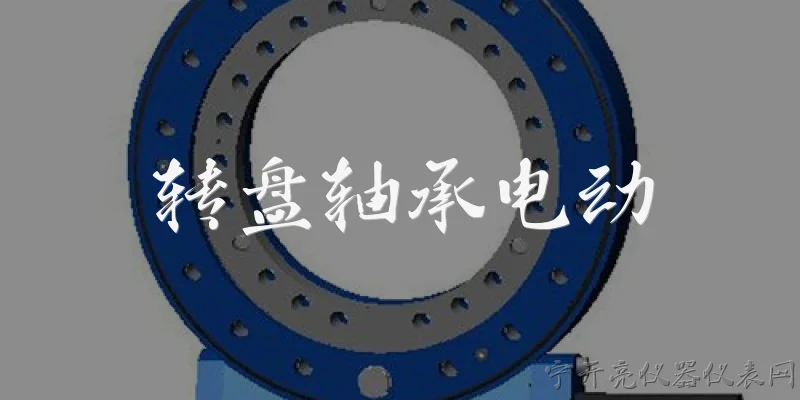
A: A slewing bearing motor is an integrated drive unit that combines a slewing ring bearing with a motor, typically hydraulic or electric, to rotate heavy loads. The bearing supports axial, radial, and tilting moments, while the motor drives the inner or outer ring through gears. This design eliminates separate components, saving space and improving efficiency. Common configurations include worm gear, planetary gear, or direct drive. They are used in cranes, excavators, and solar trackers. The motor's speed and torque are matched to the application's load requirements, often with brakes and encoders for precise control.
Q: What are the main applications of slewing bearing motors in construction machinery?
A: Slewing bearing motors are essential in construction machinery for rotating upper structures. In excavators, they enable 360-degree swing motion, allowing digging and dumping. In cranes, they provide smooth slewing for lifting and placing loads. Concrete pump trucks use them to position booms. Drilling rigs rely on them for mast orientation. These motors handle high axial and radial loads, plus tilting moments, ensuring stability. Their compact design integrates into tight spaces, reducing complexity. With high torque and precise control, they enhance productivity and safety. Many are hydraulic, but electric versions are growing for hybrid and electric machines.
Q: How do you select the right slewing bearing motor for a specific application?
A: Selecting a slewing bearing motor requires analyzing load requirements, including axial, radial, and moment loads. Determine the required torque and speed based on the application's duty cycle. Consider environmental factors like temperature, dust, and moisture, which affect sealing and lubrication. Choose between hydraulic and electric drives based on power source and control needs. Check the bearing's gear ratio and mounting interface. Verify the motor's efficiency, backlash, and braking capability. Also assess maintenance and lifespan. Consult manufacturer data for load curves and safety factors. Proper selection ensures reliable performance, longevity, and cost-effectiveness.
Q: What maintenance does a slewing bearing motor require to ensure long life?
A: Regular maintenance of a slewing bearing motor includes periodic lubrication of the bearing raceways and gears. Check for leaks in hydraulic units or electrical connections in electric motors. Inspect seals for wear and replace if damaged to prevent contamination. Monitor operating temperature and vibration, which can indicate misalignment or wear. Tighten mounting bolts to the specified torque. Clean the unit to avoid debris buildup. For hydraulic motors, check oil quality and filter changes. For electric motors, test insulation resistance. Follow the manufacturer's schedule, typically every 500-1000 hours. Early detection of issues prevents costly downtime and extends service life.
Q: What are the advantages of using an electric slewing bearing motor over a hydraulic one?
A: Electric slewing bearing motors offer higher energy efficiency and precise speed control compared to hydraulic counterparts. They eliminate hydraulic fluid leaks, reducing environmental risks and maintenance. Electric motors provide instant torque and smoother operation, with better positioning accuracy using encoders. They are quieter and require less space, as no pumps or reservoirs are needed. In hybrid and electric machinery, they integrate with battery systems, enhancing sustainability. However, hydraulic motors excel in high torque and shock load resistance. Electric options are increasingly preferred for applications demanding cleanliness, low noise, and advanced automation, despite higher initial cost.
Dialogue about
Common scenarios of "Slewing bearing motor"
【Sales Engineer】 Hello! Thanks for reaching out. How can I help you with slewing bearing motors today?
【Customer】 Hi, I'm looking for a slewing bearing motor for a solar tracker application. Can you tell me about your products?
【Sales Engineer】 Absolutely. Our slewing bearing motors are designed for high torque and precise positioning, ideal for solar trackers. They come with integrated slewing bearings and can handle axial and radial loads. What specifications do you need?
【Customer】 We need a torque of around 1000 Nm and a gear ratio of about 100:1. Also, it must be able to withstand harsh outdoor conditions.
【Sales Engineer】 That's within our range. Our model SBM-1000 provides up to 1200 Nm and standard ratios from 50:1 to 200:1. It has IP66 protection and corrosion-resistant coating, perfect for outdoor use.
【Customer】 Sounds good. What about the motor type? AC or DC?
【Sales Engineer】 We offer both AC and DC options. For solar trackers, DC brushless motors are common due to efficiency and low maintenance. We also have stepper motor versions for precise control.
【Customer】 We prefer DC brushless. Can you provide the dimensions and weight?
【Sales Engineer】 Sure. The SBM-1000 measures 300mm in diameter and 400mm in height, weighing approximately 45 kg. It has a standard flange mount. I can send you a detailed drawing.
【Customer】 Please do. Also, what is the lead time for an order of 50 units?
【Sales Engineer】 For 50 units, lead time is typically 6-8 weeks after order confirmation. If you need faster, we can discuss expedited shipping.
【Customer】 Okay. What about the price per unit for 50 units?
【Sales Engineer】 The unit price for 50 units is $850, FOB Shanghai. This includes the motor, slewing bearing, and encoder. For larger quantities, we can offer discounts.
【Customer】 That's a bit higher than our budget. Can you do better?
【Sales Engineer】 I understand. If you can commit to 100 units, we can reduce the price to $800 per unit. Also, we can discuss payment terms.
【Customer】 We might consider 100 units if the price is right. What payment terms do you offer?
【Sales Engineer】 Our standard terms are 30% deposit, 70% before shipment. For repeat customers, we can offer 30 days net. We accept T/T and L/C.
【Customer】 Alright. Can you also provide a warranty?
【Sales Engineer】 Yes, we offer a 2-year warranty on all our slewing bearing motors. We also provide technical support and spare parts.
【Customer】 That sounds satisfactory. I'll discuss with my team and get back to you. Please send the detailed drawing and quotation.